Tiger Laser Cut: A Versatile Digital Asset for Precision Crafting and Design
In the world of digital design and laser cutting, having access to high-quality vector files is essential. Tiger Laser Cut offers a comprehensive set of digital assets that cater to professionals and hobbyists alike. This product is designed for those who need precise, scalable, and editable graphics for use in laser cutting projects, signage, vinyl cutting, and more.
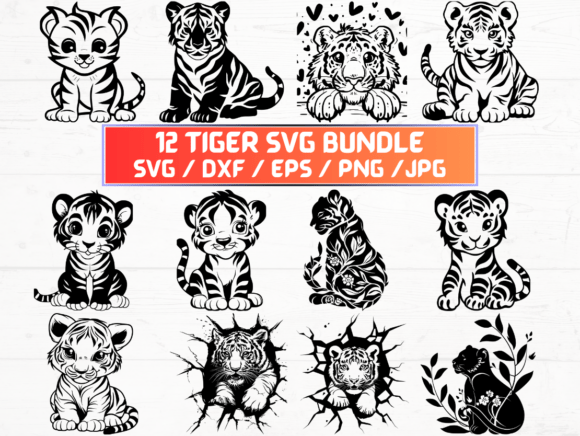
Tiger Laser Cut comes as a downloadable ZIP file containing multiple formats including SVG, PNG, DXF, JPG, and EPS. These formats ensure compatibility with a wide range of design software and laser cutting machines. Whether you're an entrepreneur launching a new product line or a creative professional looking for high-resolution assets, this package provides everything you need to bring your vision to life.
Understanding the File Formats and Their Uses
The inclusion of 12 SVG files makes Tiger Laser Cut highly versatile for web-based design applications. SVGs are resolution-independent, which means they maintain quality at any size, making them ideal for both digital and print projects. The transparent background PNG files are perfect for overlays, logos, and designs that require transparency.
For users working with laser cutters or CNC machines, the DXF files are particularly valuable. These vector files are commonly used in CAD software and ensure precision when cutting materials like wood, acrylic, or metal. The EPS files offer another layer of flexibility, especially for print-ready projects where scalability is crucial.
The JPG files included in the package provide a raster format option, which is useful for quick previews or when working with software that doesn't support vector files. Together, these formats cover a broad spectrum of needs, ensuring that Tiger Laser Cut can be integrated into various workflows seamlessly.
Who Can Benefit from Tiger Laser Cut?
Tiger Laser Cut is suitable for a wide range of professionals and enthusiasts. Entrepreneurs and small business owners can use these files to create custom signage, promotional materials, and branded merchandise. Marketers may find value in using these assets for event displays, trade show banners, or social media visuals.
Creative professionals such as graphic designers, illustrators, and content creators will appreciate the ability to incorporate these elements into their work without worrying about licensing restrictions. Educators and DIY hobbyists can also benefit from the ease of use and adaptability of the provided files, allowing them to experiment with different materials and techniques.
Freelancers and publishers who frequently produce visual content for clients or audiences will find the versatility of Tiger Laser Cut to be a significant advantage. With its multi-format support, it's easy to adjust and customize the assets to fit specific project requirements.
Real-World Applications and Practical Use Cases
One practical application of Tiger Laser Cut is in creating custom stickers or decals for branding purposes. The transparent PNG files allow for seamless integration onto various surfaces, while the DXF files ensure accuracy when cutting materials. For instance, a local café owner might use these files to design unique window decals or menu boards that stand out from the competition.
Another example is in the production of personalized gifts. Freelance crafters can use the SVG and EPS files to create custom designs that can be laser-cut or printed on items like wooden plaques, keychains, or acrylic signs. The ability to scale and modify the files ensures that each piece can be tailored to meet individual customer preferences.
Additionally, educators can utilize these assets in classroom projects or workshops focused on design and technology. Students can learn how to manipulate vector files, understand material properties, and explore the possibilities of laser cutting through hands-on experimentation.
Evaluating Quality, Usability, and Long-Term Value
The quality of Tiger Laser Cut is evident in the clarity and detail of the provided files. At 300 dpi, the PNG and JPG files are suitable for high-resolution printing, while the vector formats ensure that the designs remain sharp and clean at any scale. This level of detail is essential for achieving professional results, whether you're working on a small-scale project or a large-scale production run.
Usability is further enhanced by the variety of file types included. Users don’t have to convert between formats manually, which saves time and reduces the risk of errors. The instant download feature also adds convenience, allowing users to start working on their projects immediately after purchase.
Long-term value is another important consideration. Since Tiger Laser Cut is a digital product, it doesn’t degrade over time or require physical storage space. This makes it an excellent investment for anyone who plans to use the files repeatedly across multiple projects. The ability to reuse and repurpose the assets also increases their overall value over time.
However, it’s worth noting that Tiger Laser Cut is not a one-size-fits-all solution. While it provides a wide range of options, users may still need to make adjustments depending on the specific requirements of their project. For instance, if a particular design needs intricate detailing beyond what’s available in the standard files, additional customization may be necessary.
Practical Recommendations and Limitations
To get the most out of Tiger Laser Cut, it’s recommended to familiarize yourself with the capabilities of your design software and laser cutter. Understanding how each file format interacts with your tools will help you achieve the best possible results. Additionally, experimenting with different materials and settings can lead to creative discoveries and improved outcomes.
While the product is highly versatile, it’s important to recognize its limitations. The provided files are static and may not include animations or interactive elements. If your project requires dynamic visuals or complex interactions, you may need to source additional assets or develop custom solutions.
Another limitation is that the product assumes a certain level of technical proficiency. Users who are new to vector editing or laser cutting may need to invest time in learning the basics before they can fully utilize the potential of Tiger Laser Cut. However, this is a common challenge in many design and manufacturing fields, and there are numerous resources available to help overcome these hurdles.
Overall, Tiger Laser Cut offers a solid foundation for anyone involved in digital design, laser cutting, or related industries. Its combination of quality, usability, and flexibility makes it a valuable addition to any creative toolkit. By understanding its strengths and limitations, users can make informed decisions about how best to incorporate it into their workflow and maximize its long-term value.